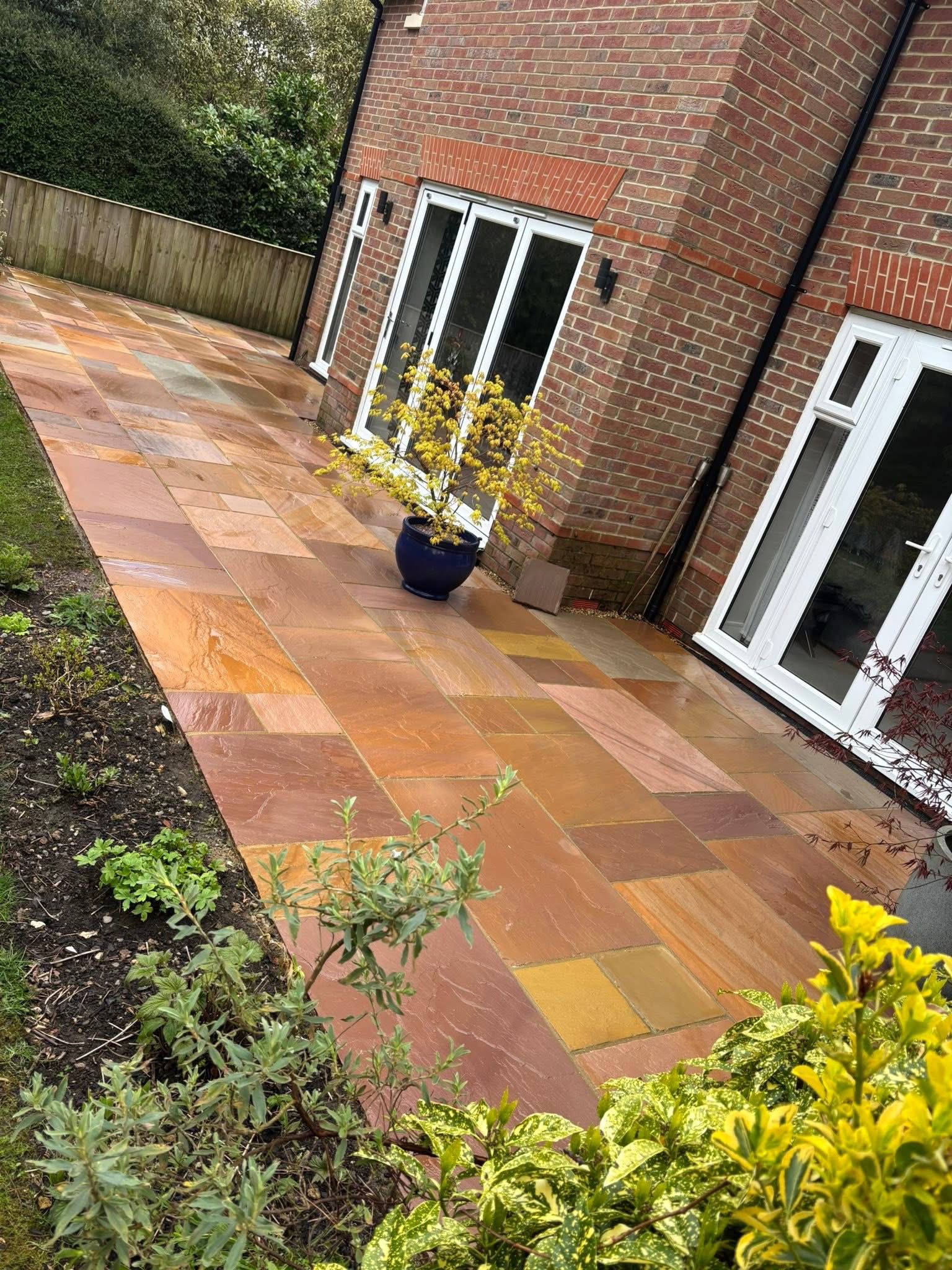
Patios often collect dirt faster than other exterior surfaces because they sit close to planting, soil and shaded garden areas. In East Grinstead, a patio that stays damp or gets limited direct sunlight can quickly develop green algae, moss and darker organic staining.
The important thing is not to treat every paving material in the same way. Concrete slabs, Indian sandstone, porcelain and block paving all have different surfaces and care requirements.
Why does a patio turn green?
Green staining is usually linked to organic growth developing on a damp surface. Shaded sections tend to show it first, particularly near walls, fences, overhanging plants and areas where water takes longer to dry.
Regular sweeping and keeping leaves off the patio can slow the build-up, but once algae has established, a deeper clean may be needed.
What is black spot on paving?
Black spot is a term commonly used for stubborn dark lichen-type staining that can become established on paving. It can be more difficult to shift than surface dirt or green algae and may need a combination of cleaning and suitable treatment rather than pressure alone.
The approach should always be matched to the paving material. Aggressive cleaning on softer natural stone can damage the surface while still failing to deal properly with the staining.
Cleaning Indian sandstone
Sandstone varies considerably in colour, texture and porosity. It benefits from a controlled approach rather than assuming the highest pressure will give the best result. Joints and pointing should also be checked before cleaning because loose or failing mortar can be disturbed.
Our patio cleaning service in East Grinstead is built around identifying the material first and then choosing the most suitable method.
Cleaning porcelain paving
Porcelain is much less porous than many natural stones, but that does not mean it should be attacked with excessive pressure. Dirt can gather in textured finishes and around joints, while incorrect chemical use can create unnecessary problems around surrounding materials and planting.
How often should a patio be professionally cleaned?
There is no fixed interval. Some patios look good for several years after a thorough clean, while shaded gardens may need maintenance more often. The amount of tree cover, drainage, foot traffic and surrounding soil all affect how quickly staining returns.
Simple ways to keep a patio cleaner
- Sweep away leaves and soil regularly.
- Keep drainage routes clear.
- Trim back heavy overgrowth where practical.
- Deal with moss and algae before the whole patio becomes slippery.
- Avoid repeatedly blasting joints at very close range.
Patio cleaning in East Grinstead
Noble Exterior Cleaning cleans patios across East Grinstead, RH19 and surrounding areas including Felbridge, Forest Row, Ashurst Wood, Crawley Down and Lingfield. We work with sandstone, porcelain, concrete paving and block-paved areas using a method selected for the surface.
See our full patio cleaning East Grinstead service, our driveway cleaning service, or send us photos for a free quote.
Frequently asked questions
Can you pressure wash Indian sandstone?
Pressure can be used on suitable sandstone, but it needs to be controlled and adjusted to the condition of the stone and joints. The material should be assessed first.
Why does my patio go green again?
Shade, moisture, surrounding planting and airborne organic material all contribute to regrowth. Cleaning removes the current build-up but cannot permanently change the environment around the patio.
Can patios be cleaned without damaging garden plants?
Professional cleaning should take nearby planting and runoff into account. Any treatments used need to be handled correctly and the working area prepared appropriately.